
Marshall Islands Company Formation: International Company Registration

***Get Started on Your Marshall Islands Company Today and Receive a 10% Discount

As seen in

EXCELLENT

4.8 stars 230 reviews

Simple, Straight Forward Pricing.

***Get Started on Your Marshall Islands Company Today and Get Your Consultation Fee Put Toward Your Incorporation Package

Special*

$1,410
  • Personalized Guidance
  • Step by Step Instruction
    Incl Document Preparation
  • Custom Business Plan
    Offshore Strategy Consultation

all-inclusive incorporation rate

$2,350
  • Includes Banking Facilitation
  • All First-year government fees
    2nd Year Fees Are Not Included
  • Apostilled Corporate and Incorporation Documents
    Digital Copies
  • Ongoing Support

Marshall Islands Company Package Includes

Company Package

    1. Government Registration Fee (First year)
    2. Registered Office Address (First year)
    3. Registered Agent Services (First year)
    4. Certificate of Incorporation
    5. Memo & Articles of Association
    6. Appointment of 1st Directors
    7. Consent Actions of the BOD
    8. Share Certificates
    9. Register of Directors
    10. Register of Officers
    11. Register of Shareholders

What if you could set up a company in about a day, pay no local tax on foreign profits, and keep your name off any public list? That is what company registration in Marshall Islands offers.

The Republic runs a modern, US-style corporate law and one of the world's largest ship registries. You can register company names in almost any language. There is no minimum capital to fund. There is no audit to file. And you never have to visit the islands to do it.

What is a Marshall Island Company

Think of it as a blank sheet with very few rules written on it.

A Marshall Islands International Business Company (IBC), known officially as a Non-Resident Domestic Corporation, is the country's premier offshore company formation vehicle. It can be taken public, raise capital, trade with third parties, and act as an investment advisor. Few offshore companies anywhere give you that much room. You can conduct business in almost any activity except banking, trust, insurance or gaming.

You get two main choices of business entities:

  • Marshall Islands IBC (Non-Resident Domestic Corporation) — uses shares, directors and shareholders. Best for trading, holding and ship ownership.
  • Marshall Islands Limited Liability Company (LLC) — uses members and managers. More flexible, and popular for asset protection and joint ventures.

Both are tax-neutral on income earned outside the country. Neither puts owner names on a public register. International business companies remain the more common pick, but limited liability companies are growing fast — especially with US owners.
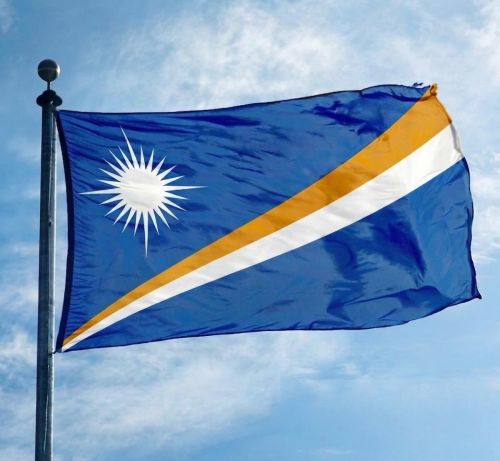
Benefits of a Marshall Islands Company

Supportive Business Environment

Tax optimisation and planning for yourself and future generations

Legal Protection

Have a second jurisdiction's business friendly laws shield you from unscrupulous creditors

Taxation

Marshall Islands IBCs benefit from a tax-neutral environment.

Flexibility

The quickest and easiest jurisdiction to setup a company

Simplicity

The process for setting up a company has minimal requirements

Privacy

The identities of company owners and directors are not made public

Why Do People Register a Company in the Marshall Islands?

Because almost nothing gets in your way.

The Republic runs a supportive business environment built around one idea: keep it simple for non-residents. Here is what that means in practice:

  • No local tax. Non-resident entities in the Marshall Islands are exempt from local taxation of any kind.
  • Speed. Registration in the Marshall Islands is fast — often 1 to 2 business days.
  • Privacy. Director and shareholder names are not on public record. They sit with your registered agent.
  • One person is enough. A single individual can be director, shareholder and secretary.
  • No accounts to file. Company documents are not filed and are not public.
  • Modern law. Corporate rules are modelled on Delaware and New York statutes.
  • No exchange controls. Money moves freely.
  • US dollar economy. No currency devaluation risk to manage.
  • Free re-domiciliation. Move an existing company in, or move it out later.
  • Global asset ownership. Assets can be held anywhere in the world.

The Marshall Islands is also home to one of the world's largest ship registries [VERIFY: your live page says second-largest; some 2026 sources rank it third by gross tonnage — pick one and use it site-wide]. That maritime reputation is why so many vessel and yacht structures sit here.

How Do You Form a Marshall Islands LLC or IBC?

    1. Assess Your Needs

      Consider your specific reasons for setting up an offshore company, including the type of business and your main goals.


    2. Select a Jurisdiction

      Find a jurisdiction that works best for you and your situation given your needs. Marshall Islands is one of your favorite due to ease of incorporation, cost and timeframe.


    3. Seek Professional Guidance

      Find a corporate service provider who can assist you with guiding you through the process


    4. Choose your structure
      There are two main options:

      IBC / Non-Resident Domestic Corporation (NDC) shareholder/director framework, most common for holding/trading

      Limited Liability Company (LLC) member based, more flexible, popular for asset protection Both offer zero tax on offshore income and no public register of beneficial owners.

    5. Choose a company name

      T
      he name must be unique and not similar to existing companies. Run a name check through your registered agent.

    6. Appoint a registered agent

      Every Marshall Islands company must have a registered agent with a physical address within the Marshall Islands. You can't file without one. Your formation service provider typically handles this.


    7. Prepare and file incorporation documents

      Submit Articles of Incorporation to the Registrar of Corporations, setting out the company name, authorized share capital, and nature of business. 


    8. Prepare KYC documents

      Required for all directors, shareholders, and UBOs: -a certified true copy of passport
      -a CV/résumé or LinkedIn profile, and
      -proof of address


    9. Open a corporate bank account

      This is usually done through third party introductions as it is difficult to open a bank account without guidance and the proper documetation.


    10. Stay Compliant & Review

      Maintain regular records and ensure government fees are paid on time and ensure that you are kept aware of any changes

What Documents Do You Get?

  • Certificate of Incorporation
  • Articles and Memorandum of Association
  • Appointment of first directors
  • Consent actions of the Board
  • Share certificates
  • Register of directors, officers and shareholders

Which Laws Govern Company Registration in the Marshall Islands?

One statute does most of the heavy lifting.

The Marshall Islands Business Corporations Act is the cornerstone. It sets the legal basis for forming, running and dissolving a corporation. Company incorporation for non-resident entities falls under the Associations Law of the Republic of Marshall Islands 1990, which also includes:

  • Business Corporations Act
  • Limited Partnership Act
  • Limited Liability Company Act of 1996 [VERIFY: your live page lists the Act without a year; the 1996 date is not stated on any source page reviewed]
  • Partnership Act (revised)

A non-resident domestic company is governed by the Business Corporations Act, which sits under the Marshall Islands Associations Law of 1990. That law exempts every non-resident company from local tax. It borrows from both US and UK models, which is part of why the rules read as familiar to bankers and lawyers.

The registry itself is run by the Marshall Islands Maritime and Corporate Registries [VERIFY], and the registered agent for non-resident entities is The Trust Company of the Marshall Islands, Inc.

What Makes The Marshall Islands Unique?


Global Asset Ownership

Assets can be held anywhere in the world

Confidentiality

The identities of directors & shareholders are not on public recorded with all information kept with the registered agent.

Monetary Stability

No fear that there will be monetary devaluation

Not publicly Registered

Information of owners are not public

Simplicity of Setup

Minimal requirements, quick and efficient setup often taking just 2 days

Flexible corporate structure

A Marshall Island company is one of the most flexible structures in the world

No need to file accounts

Company documents do not need to be filed and are not public

Tax Exemption

There are no taxes of any kind, including corporate tax, sales tax, and VAT

What Do People Use a Marshall Islands Offshore Company For?

While a IBC or LLC can have literally dozens if not hundreds of uses, here are some types of strategies that our clients use.

Asset management and protection

Holding securities and bank accounts

Tax optimization

Holding patents and trademarks

International trade

Real Property Holding

What Are the Taxes in the Marshall Islands?

For a non-resident company, the short answer is zero.

Non-resident entities — including the non-resident domestic corporation, foreign corporations, partnerships and LLCs that do not do business in the Republic — are exempt from corporate profit tax, income tax, withholding tax, estate tax and stamp duty. The headline corporate income tax rate for these entities is 0%.

There is also no VAT, no capital gains tax and no currency control.

Two things to be clear about:

  • The Republic has not signed any Double Tax Treaties.
  • You are still taxed where you live. The Republic participates in CRS and FATCA, so account information gets reported to your home tax authority. An offshore business here is not a way to hide income.

What Can't a Marshall Islands Company Do?

The restricted list is short, but it is firm.

You cannot run banking, trust services, insurance, assurance, reinsurance or gaming without a licence. You also cannot do business in the Marshall Islands itself — a company in the Marshall Islands registered as non-resident is barred from local trading.

A company registered in the Marshall Islands also may not own local real estate or bring resident organisations into its management.

Advantages
of 
Marshall Islands
Incorporation

Single ownership is possible

Modern corporate legislation

Nominee services can be used

Free re-domiciliation

Stable economic jurisdiction

No exchange controls

Range of Share Types Allowed

Meetings are not required

0% VAT


Offshore Protection Supports Clients

Specialized Consultation and Strategy

An in-depth review of your business model to ensure the Marshall Islands is the optimal jurisdiction for your needs.

Business strategy modeling and banking facilitation, where we have maintained a high success rate over the past 24 months.

Ongoing support via email or two scheduled calls with your legal consultant.

Comprehensive Company Formation Package

Document preparation, filing, and full incorporation management

One year of Registered Agent and local Registered Address services

Apostilled digital corporate and incorporation documents and shareholder and director registers

Bank Account & Financial Accounts Support

Bank introductions and opening your business account

End of year accounting solutions for filing accounts

End to end solutions for all your banking and accounting needs

Yearly Compliance & Renewals Help

Annual renewals and compliance filing ($1,100 plus applicable sales tax).

Economic Substance filings to ensure the company remains in good standing.

A 20% discount on any additional certificates required by banks or brokerages throughout 2026.

Why Choose Us?

1000s of companies
25 yrs

30+ jurisdictions

About Offshore Protection

We specialize in custom offshore strategies to reduce your taxes, diversify your wealth, and protect your assets so you can pursue your freedom.

What Our Clients Say

See why 200+ people give our service 5 stars

Read Client Testimonials

7-fig Business Owner

"Offshore Protection created a perfect offshore strategy that allowed me to transition my business, assets and life offshore"

Entrepeneur

"As a proud owner of a second passport, a fully tax-free business and several accounts around the world. I can finally say that I have my plan B covered, thanks in large part to the team at Offshore Protection!"

Consultant

"I felt like my assets were unnecessarily exposed. And due to my work I felt that I needed to keep my family safe. After hearing about Offshore Protection and the Cook Islands it was a no brainer"

    How To Start?

    Get in Touch

    Setup a private consultation (your fee goes toward your purchase) or send us a message on our contact us page

    Send Us Documents

    Have ready the required documents in order to begin the incorporation process

    Business Setup

    As soon as we have all the neccessary KYC and business documents we begin the process

    OFFSHORE STRATEGY CONSULTATION

    Your situation is
    unique.

    Your strategy should be too.

    Marshall Islands Company Corporate Details

    Anonymity, Confidentiality and Disclosure

    A non-resident domestic company does not need to be submitted to the government and is not open to the public. The country does share details in order to comply with CRS and FATCA. All beneficial owners, directors and shareholders can maintain anonymity through the use of nominee services. The names of the beneficial owner and director(s) are required to be filed with the Registered Agent, though those names and contact details are held confidentially. No financial documents, statements, accounts or audits are required to be submitted to the government.

    Company Shares

    Companies formed in the Marshall Islands may use registered, preference, redeemable shares, with or without par value and with or without voting rights. Bearer Shares are not allowed.

    Required Capital

    The minimum issued share capital for a non-resident company is one share, with a usual authorized amount of US$50,000, that is usually expressed as 500 shares without par value, which may be in any currency.

    Financial Statements Required

    There are no requirements to submit any financial statements; however, a company must keep financial statements, accounts and records of the company's business standing, financials, and records. They may be held anywhere in the world.

    Permitted Limited Liability Suffixes

    A Company must use the appropriate suffix “Corp”, “Ltd”, “S.A.”, or “PLC”

    Time Required to Form Offshore Company

    2 Business days


    Type of Law

    The Republic of the Marshall Islands has a mixed legal system, with elements of laws from the United States and the United Kingdom, combined with local statues. Corporate and companies law are primarily modelled after Delaware and NY corporate law.

    Shareholders

    A Non-Resident Domestic Corporation requires that there be at least one (1) shareholder who may either be an individual or a corporate body, may be of any nationality and resident of any country.

    Language of Name

    A Marshall Islands IBC may be in any language as long as it uses the Roman alphabet and provides an English translation.

    Trading Restrictions

    A Marshall Islands IBC is not allowed to trade within the country.

    Exchange Controls

    There are no exchange controls in Marshall Islands

    Shelf Companies Available

    Yes, shelf companies are readily available.

    Director

    A Marshal Islands IBC requires only one Director who may be an individual or a corporate body, may be a resident of any country and any nationality

    Company Secretary

    A Company Secretary is required for a Marshall Islands IBC. A Secretary can either be an individual or a corporate body and does not need to be local resident.

    Company Meetings

    Company meetings may be held anywhere in the world and are not required for a Marshall Islands IBC.

    Principal Corporate Legislation

    Company incorporation and formation of non-resident companies is under the jurisdiction of the Association Law of the Republic of Marshall Islands 1990, which includes:

    • Business Corporations Act
    • Limited Partnership Act
    • Limited Liability Company Act
    • Partnership Act (revised)

    Name Restrictions

    Any company name that is already in use or is deemed offensive or undesirable by the Register may not be used. The following words may also not be used, unless the company receives special permission from the Register; these include: trust, partnership, gaming, foundation, bank, insurance, or establishment.

    Access to Double Tax Treaties

    The Republic of the Marshall Islands has not signed any Double Tax Treaties


    Powers of the Company

    The powers of the company have the same powers as a natural person.

    Registered Office Required

    Yes, Marshall Island company incorporation requirements state that a local, registered office is mandatory for every non-resident company

    Local Presence

    Registered Agent and office is required

    Names of Company Requiring a Special Licence or Permission

    The following words may also not be used, unless the company receives special permission from the Register; these include: bank, insurance, trust and gaming.

    Annual Reporting

    There are no annual reporting requirements for a Marshall Islands IBC

    Audit Requirements

    There are no audit requirements needed for a Non-Resident domestic corporation

    How Is Marshall Islands Company Formation Changing in 2026?

    The reputational picture just got clearer — and the compliance picture got sharper.

    The fact: On 17 February 2026, the Council of the European Union published its updated list of non-cooperative jurisdictions for tax purposes. The list now contains 10 jurisdictions, and the Marshall Islands is not one of them. The Republic was removed from Annex I on 17 October 2023 and has stayed off it since. In that same February 2026 review, the Council added the Turks and Caicos Islands, specifically over weak enforcement of economic substance requirements. (Source: Council of the EU, "Taxation: Council updates the EU list of non-cooperative jurisdictions for tax purposes", 17 February 2026.)

    What 25 years of formation work tells us: the listing itself is no longer the thing that decides whether your company works. Compliance officers stopped asking "is this jurisdiction on a list?" some time ago. They now ask "can this client show me what the company actually does?" We see far more accounts stall over a thin substance story than over the flag on the passport or the certificate. A clean jurisdiction buys you the meeting. It does not buy you the account.

    What we expect next: the February 2026 decision on Turks and Caicos suggests the EU has shifted from listing zero-tax regimes to auditing how well they police substance. If that pattern holds, Marshall Islands entities should expect their annual economic substance notification to be checked more carefully at renewal — not just filed. Build the paperwork trail from year one rather than reconstructing it later. This is a read on current direction, not a certainty.

    Frequently Asked Questions
    • What is a Marshall Islands company best used for?

      Most commonly: ship and yacht ownership, holding companies, international trading, investment vehicles, and joint ventures. The RMI operates one of the world's largest ship registries, so maritime use is its signature strength. It is also popular for crypto and fintech holding structures.

    • What's the difference between a Marshall Islands IBC and an LLC?

      An IBC (Non-Resident Domestic Corporation) uses shares, directors, and shareholders — best for trading, holding, and ship ownership. An LLC uses members and managers, offers pass-through flexibility, and is often preferred by US owners and for joint ventures. Both are tax-exempt on non-RMI income.

    • How much does it cost to form and maintain a Marshall Islands company?

      Our Marshall Islands formation packages start at $1,410, with an all-inclusive incorporation rate of $2,350 that covers all first-year government fees, apostilled corporate documents, and banking facilitation. Annual renewal and compliance filing is $1,100 plus applicable sales tax.

    • How long does registration take, and do I need to travel there?

      Usually 1–3 business days once documents are in order. No travel required — the entire process is handled remotely through a licensed registered agent.

    • What do I need to provide to get started?

      Proposed company name, a certified passport copy for each director/shareholder/UBO, proof of address (recent utility bill or bank statement), and a short description of intended business activities. A professional reference may be requested for compliance.

    • Do I need local directors, shareholders, or a registered agent?

      No local directors or shareholders are required — a single person can hold all roles, and any nationality is accepted. A registered agent in the Marshall Islands is mandatory and handles official filings and correspondence.

    • Are Marshall Islands companies tax-free, and how does FATCA/CRS affect me?

      Non-resident entities pay no RMI tax on foreign-source income, capital gains, or dividends. However, you are still taxable where you are personally resident. The RMI participates in FATCA and CRS, so account information is reported to your home tax authority — a Marshall Islands company is not a way to hide income.

    • Does economic substance apply to my company?

      Possibly. Substance rules apply to entities carrying out relevant activities — banking, insurance, fund management, financing, shipping, headquarters, distribution, IP, and holding company business. Pure holding companies face a light-touch test; others must demonstrate real activity, staff, or expenditure in the RMI.

    • Is ownership information kept private?

      Yes — directors, shareholders, and members are not listed on any public register. Beneficial ownership details are held privately by the registered agent and disclosed only to authorities under legal process or international information-exchange obligations.

    • Is the Marshall Islands reputable, and will banks open accounts for it?

      The RMI is a well-established jurisdiction, a UN member, and not on the FATF blacklist. Banks will open accounts, but expect standard offshore due diligence — clear source of funds, clean documentation, and a credible business purpose. Using an experienced agent makes banking introductions much smoother.

    • Can I register a ship or yacht under my Marshall Islands company?

      Yes, and this is one of the RMI's flagship services. The registry is recognised worldwide, flag-approved for most ports, and commonly used for commercial vessels, superyachts, and offshore rigs. Registration can be done alongside company formation.

    • What are the ongoing annual compliance requirements?

      Pay the annual government fee and registered agent fee, keep internal records of directors/members and transactions, and file an economic substance declaration if applicable. There is no requirement to file public accounts or audited financials for standard non-resident entities.

    © 1996–2026. Offshore Protection. All Rights Reserved.

    Site Maintained by Imagine Digital