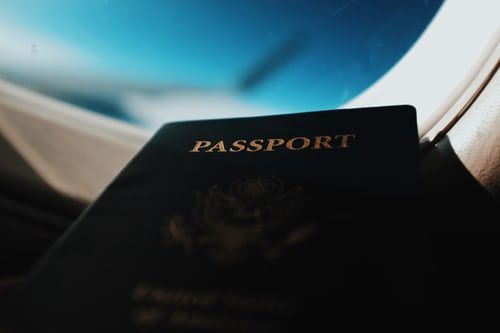

Want a stable, dollar-based home for part of your savings or your company’s cash? For decades, people have looked to Panama for exactly that. Its banks serve clients from all over the world, and the US dollar is the national currency. For many savers, that means less currency risk. Used well, an account here adds asset protection, diversification and access to several major currencies. It is not a secret account, though. This guide covers the real costs, the documents, each step to open your account, and the rules that apply in 2026.
Key Takeaways
- A Panama bank account is supervised by the Superintendency of Banks (SBP).
- There is no deposit insurance. Only state-owned banks carry a government guarantee (IMF, 2024).
- Your account is reported under global tax-sharing rules. It is private, not secret.
- Minimum balances and fees on bank accounts vary from bank to bank.
Why Choose Panama for Offshore Banking? Five Benefits That Hold Up
The Republic of Panama sits in Central America, between Costa Rica and Colombia. It has long been a popular offshore jurisdiction, with deep roots in offshore finance. Our article on the country’s past as an offshore centre tells that story. Here is what an account can give you today:
- Asset protection. Pair your account with a Panama Foundation with an IBC for an extra legal layer between your assets and future claims.
- Diversification. Money held outside your home country spreads your political and economic risk.
- Dollars, and more. The US dollar is the national currency, and there are no foreign exchange controls or limits on moving money in or out (US Commerce Department). So the local currency is the dollar. Some banks also offer multi-currency accounts in other major currencies. Which ones varies by bank, and we confirm this for your case.
- A deep banking market. Deposits in Panama’s International Banking Center passed US$120 billion in April 2026, according to SBP data (La Estrella de Panamá). The country opened its banking sector to foreign competition in 1970, and local and foreign banks compete on equal terms (US Commerce Department). Financial services are a pillar of the economy.
- A regional hub. The canal, the free zones and strong flight links make the country a trade hub for Latin America. Many clients weigh it against Singapore and Hong Kong, and it suits people who do business in the Americas.

Thinking about living there one day? The Friendly Nations Program is one route. Since August 2021 it asks for one of three ties: a local job, a property worth at least US$200,000, or a US$200,000 fixed deposit. The deposit must sit, free of any lien, at a general licence bank for three years (National Immigration Service, under Executive Decrees 197 and 226 of 2021). The old US$5,000 deposit route no longer applies. There are several different ways to get there.
What About Tax? Here Are the Facts
The country uses a territorial tax system. Income from Panamanian sources is taxed, while income earned abroad generally is not. Companies pay a fixed tax rate of 25% on local profits (PwC, 2026). Interest on savings accounts and time deposits at banks based in the country is exempt from personal income tax (PwC).
There is one catch for groups. From the 2027 tax year, under Law 526 of 28 May 2026, a company that belongs to a multinational group and earns foreign passive income must show real substance in the country to keep a 0% rate. If it can’t, it pays 15% on that income (KPMG, June 2026).
A Panama offshore company is a common way to hold the account. But none of this changes what you owe at home. Your own country may tax the income, and its CFC rules can reach your company. The country does have a network of double tax treaties. Get advice on taxation where you live before you move money.
Is Your Account Private? How Global Tax Reporting Works
Banking privacy and confidentiality still matter, and banks protect client details under the law. But privacy is not secrecy. The rules changed a lot after 2016, as our guide to the country’s banking laws explains.
- CRS. In 2016 the country committed to the OECD’s Common Reporting Standard, with exchanges starting in 2018 (PwC). It signed the Multilateral Competent Authority Agreement on 15 January 2018, and first exchanges were set for September 2018 (OECD). Banks report accounts held by tax residents of other countries, and that data flows to their tax authorities.
- US reporting. The US and Panama signed a Model 1 agreement under FATCA on 27 April 2016. Panama approved it by Law 47 of 24 October 2016 (Panama Tax Authority, DGI). If you are a US person, your bank reports your account, which then reaches the IRS.
- Your own duty. You may also need to report offshore accounts to your own government. Check the rules where you live.
An offshore account here is reported, not hidden. Plan with that in mind.
Why Work With Offshore Protection25 Years of Offshore Expertise. One Trusted Partner.Since 1996, we have helped thousands of entrepreneurs, investors, and high net worth individuals using the world's strongest offshore structures including trusts, foundations, international companies, and banking solutions tailored to your specific situation.✔ Boutique service ✔ Deep jurisdiction expertise ✔ Strict confidentiality
Who Regulates the Banks, and Is Your Money Insured?
The Superintendency of Banks (Superintendencia de Bancos, or SBP) licenses and supervises banks (US Commerce Department). Its customer due diligence rules are now set out in Acuerdo 1-2026 of 16 January 2026, which replaced Acuerdo 10-2015. The banking law sets up three classes of operation (US Commerce Department):
- General licence banks run full-service banks and compete for local and foreign deposits.
- International licence banks can only take deposits from people and firms located overseas.
- Representative offices can only do representational work, not take deposits.
Two state-owned institutions also take deposits. So you will find local banks next to branches of foreign groups. Each one sets its own rules on who it accepts.
Is There Deposit Insurance?
No. The IMF confirmed in 2024 that there is no deposit insurance framework. Only state-owned banks carry an explicit government guarantee. There is also no central bank and no lender of last resort to back the banking system in a crisis (IMF, 2024). The IMF adds that banks hold capital and liquidity well above the legal minimums (IMF, 2024). Protect yourself:
- Check the bank’s licence on the SBP website.
- Read the bank’s published financial reports.
- Spread large balances across more than one bank.
How Much Money Do You Need? Deposits and Fees
There is no legal minimum deposit for non-resident clients. Each bank sets its own opening deposit and minimum balance, and these vary widely. We confirm the figure for your case before you apply.
- Bank fees. Opening, maintenance and wire transfer fees are set by each bank, and most don’t publish them for non-residents. Ask for the full fee schedule in writing before you apply.
- Our service fee. This covers bank selection, file preparation and support through the bank’s review.
What Comes With the Account?
- Cards. Many banks issue debit cards, and some offer credit cards. Terms vary by bank and client profile.
- Online access. Ask each bank about online banking and how it handles international payments.
- Bigger balances. If you plan to hold larger savings, ask whether the bank offers private banking or wealth management.
Panama Banking Features at a Glance
| Feature | What to expect | Source |
|---|---|---|
| Minimum deposit | No legal minimum. Each bank sets its own, and we confirm it for your case | Bank policy |
| Documents | Passport, proof of address, references, proof of funds, company papers | SBP Acuerdo 1-2026 |
| Timeline | Varies by bank and by how complete your file is. We give you an estimate for your case | Bank policy |
| Currencies | US dollar as standard; other major currencies at some banks | US Commerce Department |
| Remote opening | Varies by bank. Many ask to meet you in person, and we confirm the policy for your case | Bank policy |
| Fees | Set by each bank and quoted on request | Bank policy |
| Regulator | Superintendency of Banks (SBP) | SBP |
| Deposit insurance | None, except the guarantee for state-owned banks | IMF (2024) |
| Tax reporting | CRS exchanges since 2018; US agreement since 2016 | PwC; DGI |
Personal or Business Account: Which One Fits You?
Banks here serve individuals and businesses from many countries, with both personal and corporate bank accounts. This is not only for high-net-worth individuals. Your main choice is who owns the account.
- You, personally. You can hold an account in your own name, so you don’t need a company. Some banks open accounts for non-residents, though each sets its own rules.
- A company. Some banks accept foreign companies as well as local companies. Others prefer or require a Panama corporation. We check this for your structure before you apply.
- A company plus a trust or foundation. For more protection, we often suggest pairing a Panama IBC with a Nevis or Cook Islands trust. Two separate legal systems add an extra layer.
A business bank account in Panama suits firms that trade across the region and need tools for international business. For many owners, it is one step in the internationalization of their company. Small companies can bank here too, though they may face more questions. Banks look closely at offshore companies, so ask early whether a bank will open bank accounts for a newly formed entity.
Which Documents Will the Bank Ask For?

Every bank runs KYC checks under the SBP’s rules (Acuerdo 1-2026). Expect to provide the following.
For Each Signer, Director and Owner
- A valid passport
- Proof of address, such as a utility bill
- A bank reference and a professional reference
- Proof of funds, showing where your money comes from
- A tax residency self-certification, used for CRS and US reporting
For a Company
- Articles of incorporation
- Company certificate
- A business plan
The bank may ask for more. Banks expect full compliance, so clear and complete papers are the fastest way through.
How to Open a Panama Offshore Bank Account
Ready to open an offshore bank account in Panama? Follow these steps.
- Choose your structure. Decide whether you, a company or a foundation will own the account.
- Shortlist banks. There is no best offshore bank for everyone. Pick a bank in Panama that fits your currencies, balance and business type. Compare the full range of banking services and bank accounts on offer.
- Gather your documents. Use the lists above, and ask the bank for its own forms.
- Apply. Some banks open accounts through a remote process, while many ask you to visit. We confirm each bank’s policy for your case.
- Pass due diligence. The bank reviews your file. Clients the bank rates as higher risk face enhanced due diligence under the SBP’s rules (Acuerdo 1-2026).
- Fund the account. Once approved, send your opening deposit by wire transfer from a bank you already use.
- Set up access. Activate your cards and online access, and keep your details up to date.
Plan for the bank account opening to take some time. Timelines vary by bank and by how complete your file is, and we give you an estimate for your case. No bank can promise approval, and neither can we.
What Our Clients SayTrusted by Thousands of Clients Since 1996."Offshore Protection helped me structure my assets in a way I never thought possible. Professional, discreet, and thorough — I wouldn't trust anyone else with my offshore strategy."— Private Investor, United States★★★★★
4.8 stars · 230 verified reviews
What Are the Drawbacks? An Honest List
- Your account is reported. CRS and the US agreement mean your tax office will likely learn about it.
- The EU tax blacklist. The country is still on the EU list of non-cooperative jurisdictions for tax purposes, last updated on 17 February 2026 (Council of the EU). Payments and structures linked to listed places can draw extra scrutiny in EU countries.
- No deposit insurance. Your deposit is only as safe as your bank (IMF, 2024).
- Tough checks. Every non-resident applicant goes through thorough vetting, and new or smaller firms may find it harder.
- Possible visit. Many banks still want to meet you in person before they open the account.
How Is Panama Offshore Banking Changing in 2026?
The biggest change for account holders is stricter onboarding. On 16 January 2026, the SBP issued Acuerdo 1-2026, its new rulebook for stopping the misuse of banking and trust services. It replaced Acuerdo 10-2015 and updates the rules on knowing your customer, enhanced due diligence and transaction monitoring. Expect banks to ask sharper questions about your source of funds.
The money laundering picture has improved. The FATF took Panama off its grey list in October 2023 (FATF), and it was not on the list after the June 2026 review (FATF). The European Commission then removed Panama from its list of high-risk third countries under Delegated Regulation (EU) 2025/1184, adopted on 10 June 2025 and in force since 5 August 2025 (EUR-Lex). EU banks no longer have to apply the extra checks that listing triggers automatically.
The tax blacklist is a separate list. Panama is still on it, and the next review is due in October 2026 (Council of the EU). Panama’s bank line-up is shifting too. Scotiabank handed its local operations to Davivienda on 1 December 2025, and they now run under the Davivienda brand (Scotiabank).
Our insight. At Offshore Protection, we have provided account opening services since 1996, and we help clients open offshore accounts in many places. The pattern is clear. Files rarely stall on local rules. They stall on a missing reference letter or a thin story about where the money came from. Offshore banking works best when your file answers a compliance officer’s questions before they ask.
Our prediction. With the EU money laundering listing gone, we expect some banks to widen the range of clients they accept. But the new SBP rules, the tax blacklist and global compliance standards mean checks will stay strict. That is a forecast based on current trends, not a promise.
Is a Panama Account Right for You?
If you want a dollar-based account, asset protection and access to major currencies, Panama deserves a close look. Accept that your account will be reported, and budget for a solid balance. Get tax advice at home first. The clients who do best arrive with a complete file. Get in touch, and we will help you pick a bank, prepare your papers and open an account the right way.
Offshore Bank Account Update: If you are looking for privacy and asset protection we recommend offshore business accounts. Offshore personal accounts do not offer the privacy and asset protection you are looking for. We suggest using offshore corporate accounts or a private Swiss account. Get in touch for more info.
Frequently Asked Questions
- Can a foreigner open a bank account in Panama?
Yes. Banks accept foreign clients once they pass due diligence. You will need a valid passport, proof of address, a reference letter and proof of where your money comes from. Many banks ask to meet you in person, so we confirm each bank’s policy for your case.
- How much does it cost to open and maintain a Panama offshore bank account?
There is no legal minimum deposit. Each bank sets its own opening deposit, minimum balance, maintenance fees and wire fees, and we confirm these for your case. Our service fee is separate. Ask for every fee in writing before you apply.
- Can I open an account without visiting?
It depends on the bank. Some may accept a remote process, while many still want to meet you in person. We confirm the bank’s policy before you apply.
- Do I need a local company to bank there?
Not for a personal account. For a business account, some banks accept companies formed elsewhere, while others prefer or require a Panama corporation. Policies vary by bank.
- Which currencies can I hold?
The US dollar is the national currency, so most accounts are in dollars. Some banks also offer accounts in other major currencies. Which ones varies by bank.
- Are deposits insured?
No. The IMF confirmed in 2024 that there is no deposit insurance framework. Only state-owned banks carry an explicit government guarantee.
- Will my home tax office learn about my account?
Most likely, yes. The country has exchanged account data under the Common Reporting Standard since 2018, and US accounts are reported under a 2016 agreement with the United States. Declare your account and any income at home.
- Who regulates the banks?
The Superintendency of Banks (SBP) licenses and supervises them. Its current customer due diligence rules are in Acuerdo 1-2026. You can check a bank’s licence on the SBP website.
- Is Panama on any blacklist?
It depends on the list. Panama left the FATF grey list in October 2023, and the EU took it off its high-risk money laundering list in August 2025. It is still on the EU’s tax blacklist, last updated in February 2026.
- How long does it take to open the account?
It varies by bank and by how complete your file is. We give you an estimate for your case. A complete file with clear proof of funds is the best way to avoid delays.
- Is a Panama bank account private or secret?
It is private, not secret. Banks protect client details under the law, but they know and verify every account holder and report accounts under CRS and FATCA where they apply.
- Is interest on a Panama bank account taxed in Panama?
Interest on savings accounts and time deposits at banks established in Panama is exempt from Panamanian personal income tax. Your home country may still tax it, so check the rules where you live.
How Offshore Protection Can Help
____
Offshore Protection is a boutique consultancy specializing in offshore solutions creating bespoke global strategies using offshore companies, trusts, and second citizenships so you can internatioanlize and diversify your business and assets.
We help you every step of the way, from start to finish with a global team of dedicated consultants. Contact us to see how we can help you.